ARDill

Problem

When your significant other travels a lot and complains about missing you, you build an AR version of yourself. Right? 

Solution

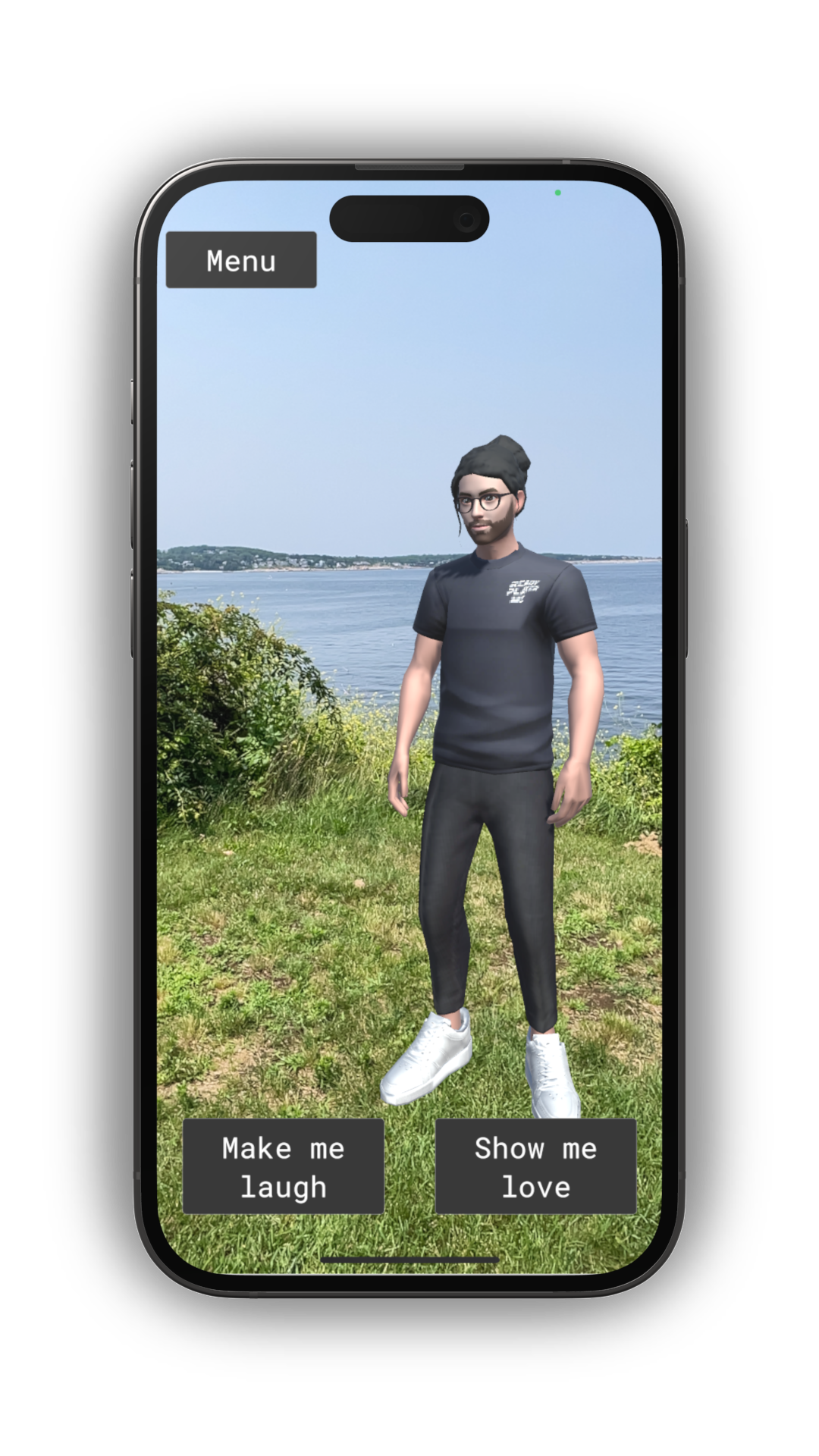
A “Magic 8 Ball of Affection”, arDill brings me to her. Preloaded with phrases of affection and to make her laugh, a random phrase will be triggered by pressing the respected button.
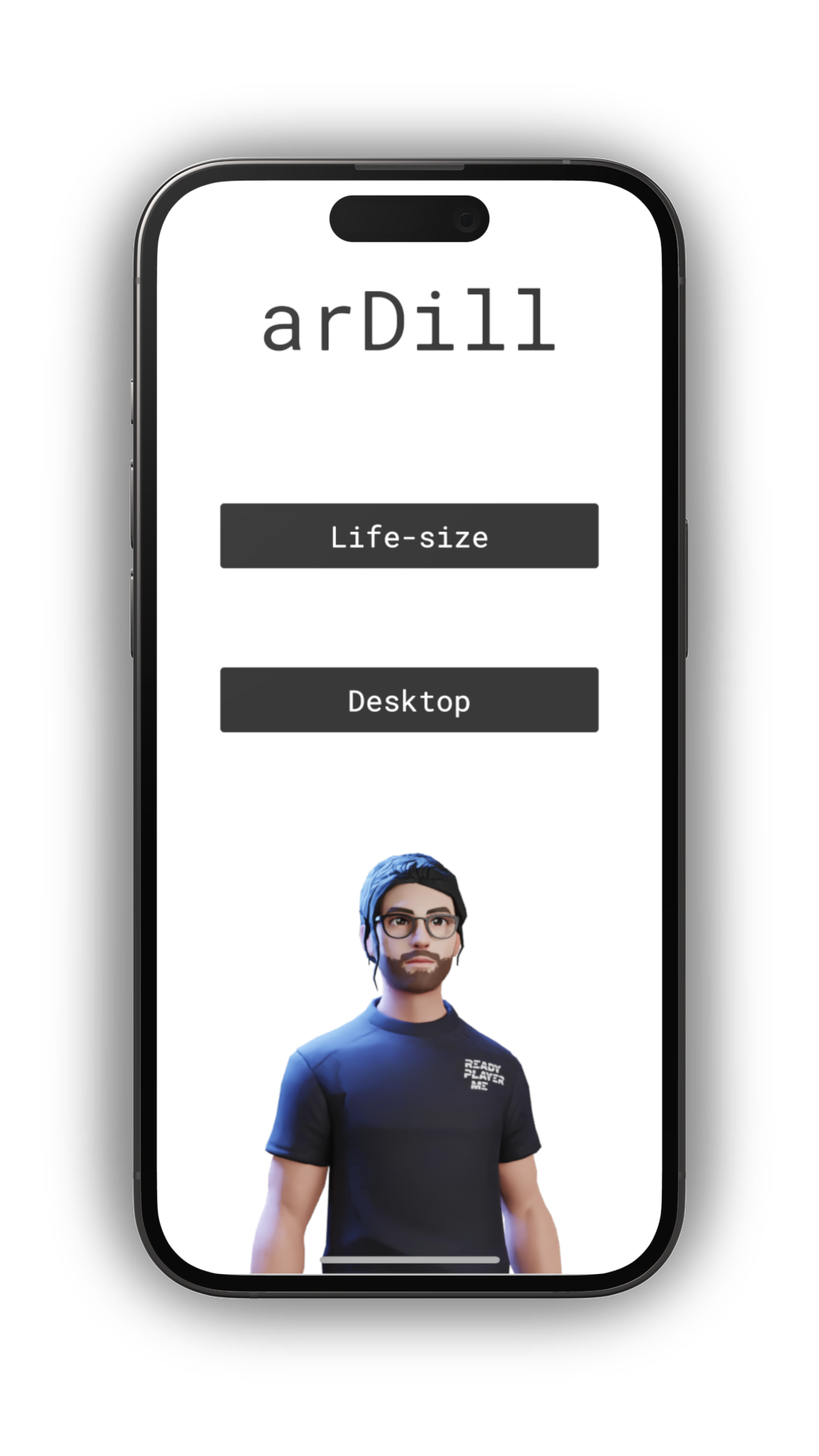
  • arDill menu screenshot in an iPhone
  • iPhone showing arDill by the ocean

Why this matters

Remote work has made productivity tools better but human connection harder. Traditional video calling flattens spatial communication — the gestures, presence, and spontaneity that make real conversation feel real — into a grid of talking heads on a screen.


arDill started as a personal experiment, but it pointed at something bigger: AR avatars have the potential to restore a sense of presence in remote communication. By superimposing lifelike representations of people into shared physical spaces, the technology bridges the gap between where someone is and where they need to feel connected.


The implications extend beyond the personal use case — organizations with globally distributed teams face compounding costs from disengagement and isolation. Spatial communication tools that replicate the texture of in-person interaction aren't just a novelty. They're an emerging solution to a documented productivity and retention problem.

(914) 255-7392

dillonhickey07@gmail.com

Dillon Hickey

Pierview Design Inc. © 2025 All Rights Reserved

ARDill

Problem

When your significant other travels a lot and complains about missing you, you build an AR version of yourself. Right? 

Solution

A “Magic 8 Ball of Affection”, arDill brings me to her. Preloaded with phrases of affection and to make her laugh, a random phrase will be triggered by pressing the respected button.

  • arDill menu screenshot in an iPhone
  • iPhone showing arDill by the ocean

Why this matters

Remote work has made productivity tools better but human connection harder. Traditional video calling flattens spatial communication — the gestures, presence, and spontaneity that make real conversation feel real — into a grid of talking heads on a screen.


arDill started as a personal experiment, but it pointed at something bigger: AR avatars have the potential to restore a sense of presence in remote communication. By superimposing lifelike representations of people into shared physical spaces, the technology bridges the gap between where someone is and where they need to feel connected.


The implications extend beyond the personal use case — organizations with globally distributed teams face compounding costs from disengagement and isolation. Spatial communication tools that replicate the texture of in-person interaction aren't just a novelty. They're an emerging solution to a documented productivity and retention problem.

About

Work

(914) 255-7392

dillonhickey07@gmail.com

Dillon Hickey

Pierview Design Inc. © 2025 All Rights Reserved

ARDill

Problem

When your significant other travels a lot and complains about missing you, you build an AR version of yourself. Right? 

Solution

A “Magic 8 Ball of Affection”, arDill brings me to her. Preloaded with phrases of affection and to make her laugh, a random phrase will be triggered by pressing the respected button.

  • arDill menu screenshot in an iPhone
  • iPhone showing arDill by the ocean

Why this matters

Remote work has made productivity tools better but human connection harder. Traditional video calling flattens spatial communication — the gestures, presence, and spontaneity that make real conversation feel real — into a grid of talking heads on a screen.


arDill started as a personal experiment, but it pointed at something bigger: AR avatars have the potential to restore a sense of presence in remote communication. By superimposing lifelike representations of people into shared physical spaces, the technology bridges the gap between where someone is and where they need to feel connected.


The implications extend beyond the personal use case — organizations with globally distributed teams face compounding costs from disengagement and isolation. Spatial communication tools that replicate the texture of in-person interaction aren't just a novelty. They're an emerging solution to a documented productivity and retention problem.