
GSM Outdoors

GSM Outdoors builds traditional and connected outdoor hardware and software used by hunters and outdoor enthusiasts in real-world field conditions. I joined as the first dedicated design leader, inheriting a fragmented product ecosystem, no established design processes, and a team that needed to be built from scratch.

Problem

GSM's product ecosystem had grown without design leadership or process infrastructure. Multiple apps across different hardware categories were being built inconsistently, with no shared design processes, no handoff standards, and no framework for cross-functional collaboration resulting in fragmented user experiences and high rework costs.

Solution

Built the design function from the ground up by scaling the team, establishing handoff standards, design QA processes, and design infrastructure that gave engineering and product a consistent, reliable design partner for the first time.

What was Built

The following artifacts represent the process infrastructure established to bring consistency, quality, and scalability to GSM's design and engineering workflow.
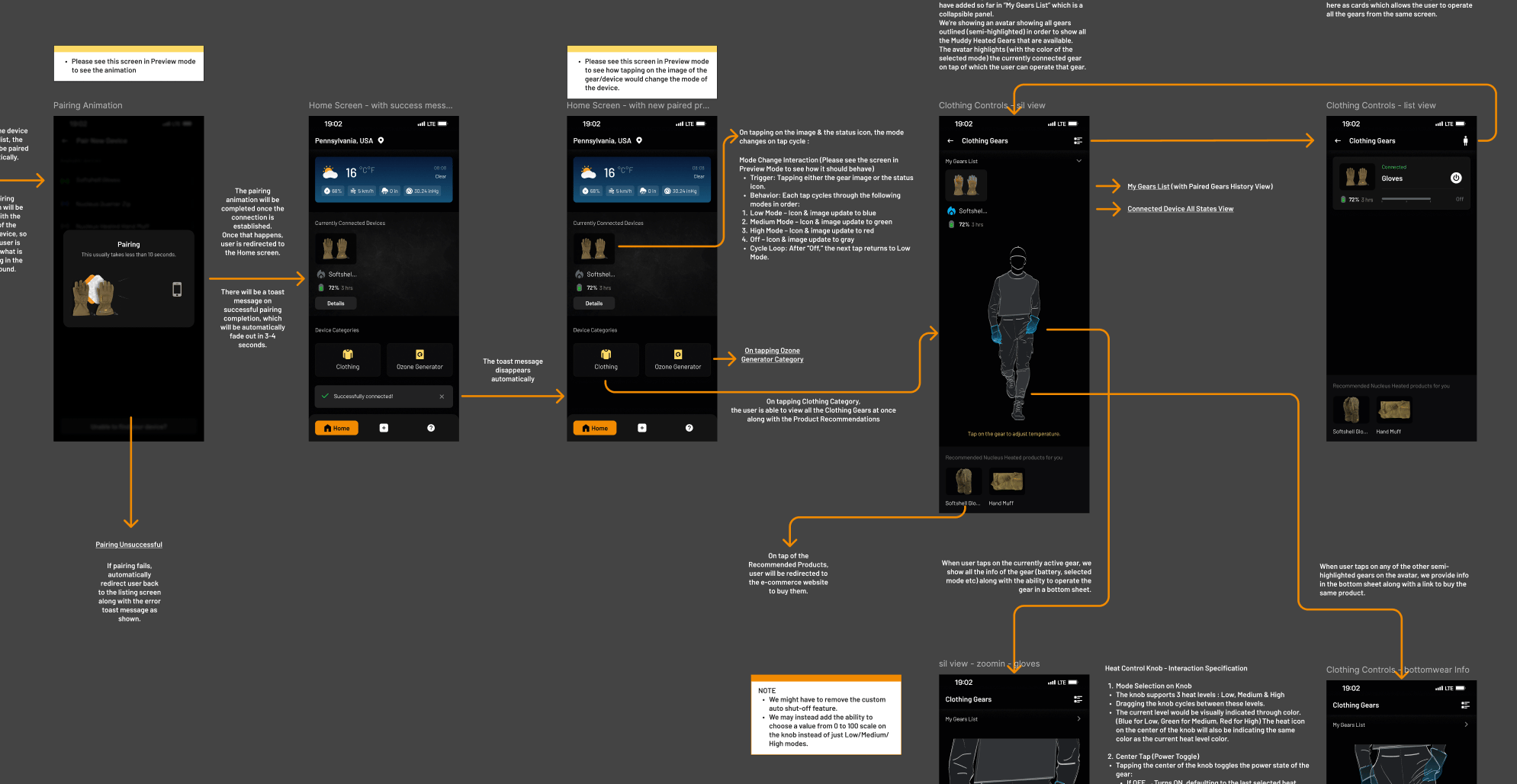
display flow of in depth design handoff documentation

Handoff Flow

Annotated interaction specifications documenting behavior, edge cases, and state logic — established as the standard for design-to-engineering handoff across the product ecosystem. The result was fewer misinterpretations, less rework, and faster implementation cycles.
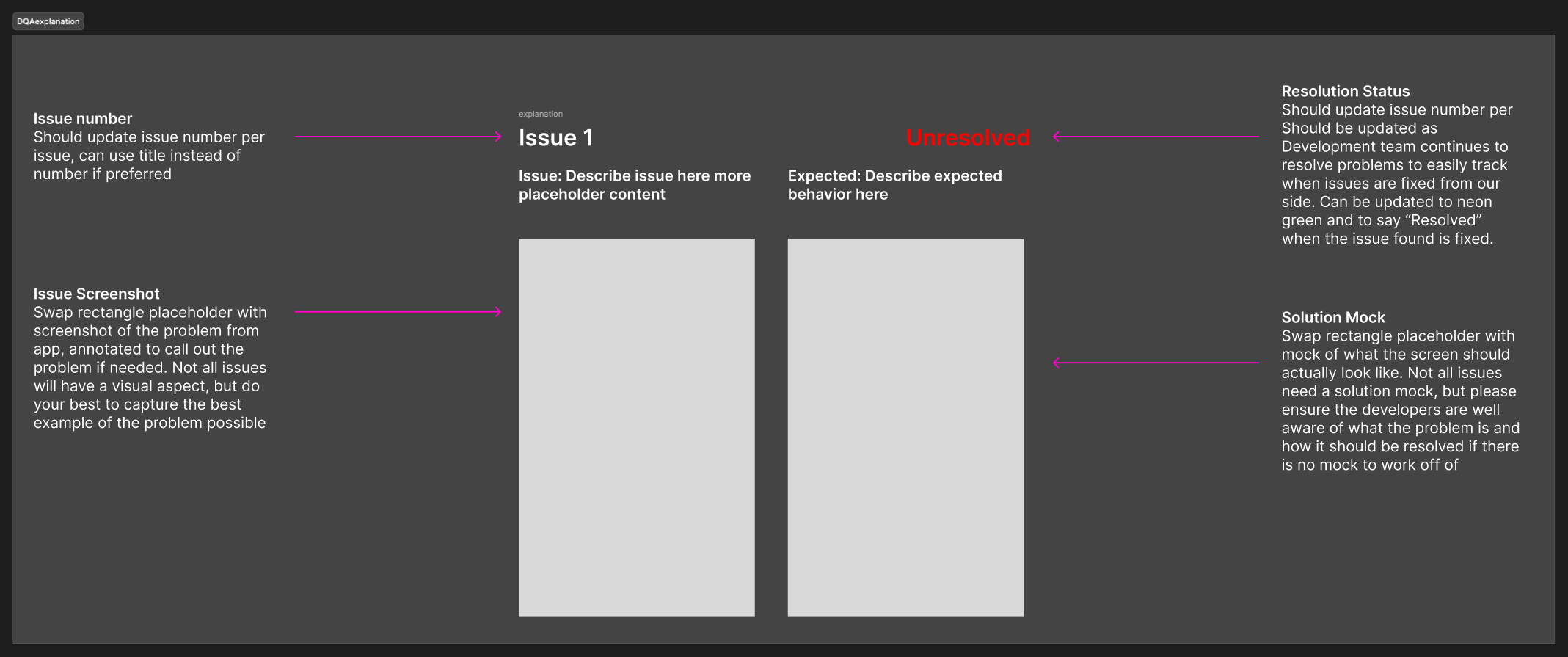
Design quality assurance template

Design Quality Assurance Template

A design quality assurance framework created to track implementation issues, expected behavior, and resolution status giving engineering and design a shared language for quality control outside of standard QA. This reduced the back-and-forth on implementation review and raised the baseline quality of shipped features.
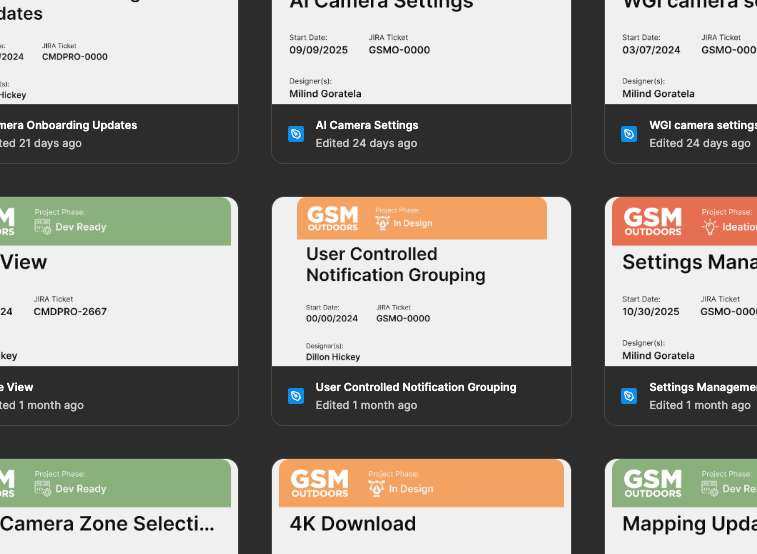
Figma environment uniformed covers

Figma Cover Cards

Standardized project documentation within the Figma environment, including phase status, JIRA integration, designer assignments, and set handoff page structure. This gave the team operational visibility across projects for the first time, reducing confusion around priorities and ownership.

Why This Matters

The work at GSM produced measurable results across both the business and the design function, delivering revenue impact while establishing the operational foundation the team needed to scale.

Two Patents Pending

Contributed to the design and development of two innovative connected hardware features (360 degree Trail Camera and Trail Camera Heatmap) resulting in pending patent applications.

27% Increase in App-Driven Revenue

Design strategy and execution across GSM's mobile ecosystem contributed directly to stronger product-market fit and measurable revenue growth.

Design Team Scaled 3x

Grew the design team from a single designer to a multi-person global team, establishing hiring standards, onboarding processes, and collaborative workflows to support the expanded capacity.

Beyond the individual metrics, the work at GSM proved that design infrastructure isn't overhead, it's a multiplier. Building the right foundation didn't just improve the product. It changed how the entire organization valued and utilized design.

Role

Head of Design: product and systems design, interaction architecture, cross-functional collaboration with engineering and product, design operations, and team development across GSM's connected hardware ecosystem.

(914) 255-7392

dillonhickey07@gmail.com

Dillon Hickey

Pierview Design Inc. © 2025 All Rights Reserved

GSM Outdoors

GSM Outdoors builds traditional and connected outdoor hardware and software used by hunters and outdoor enthusiasts in real-world field conditions. I joined as the first dedicated design leader, inheriting a fragmented product ecosystem, no established design processes, and a team that needed to be built from scratch.

Problem

GSM's product ecosystem had grown without design leadership or process infrastructure. Multiple apps across different hardware categories were being built inconsistently, with no shared design processes, no handoff standards, and no framework for cross-functional collaboration resulting in fragmented user experiences and high rework costs.

Solution

Built the design function from the ground up by scaling the team, establishing handoff standards, design QA processes, and design infrastructure that gave engineering and product a consistent, reliable design partner for the first time.

What was Built

The following artifacts represent the process infrastructure established to bring consistency, quality, and scalability to GSM's design and engineering workflow.

display flow of in depth design handoff documentation

Handoff Flow

Annotated interaction specifications documenting behavior, edge cases, and state logic — established as the standard for design-to-engineering handoff across the product ecosystem. The result was fewer misinterpretations, less rework, and faster implementation cycles.

Design quality assurance template

Design Quality Assurance Template

A design quality assurance framework created to track implementation issues, expected behavior, and resolution status giving engineering and design a shared language for quality control outside of standard QA. This reduced the back-and-forth on implementation review and raised the baseline quality of shipped features.

Figma Cover Cards

Standardized project documentation within the Figma environment, including phase status, JIRA integration, designer assignments, and set handoff page structure. This gave the team operational visibility across projects for the first time, reducing confusion around priorities and ownership.

Figma environment uniformed covers

Why This Matters

The work at GSM produced measurable results across both the business and the design function, delivering revenue impact while establishing the operational foundation the team needed to scale.

Two Patents Pending

Contributed to the design and development of two innovative connected hardware features (360 degree Trail Camera and Trail Camera Heatmap) resulting in pending patent applications.

27% Increase in App-Driven Revenue

Design strategy and execution across GSM's mobile ecosystem contributed directly to stronger product-market fit and measurable revenue growth.

Design Team Scaled 3x

Grew the design team from a single designer to a multi-person global team, establishing hiring standards, onboarding processes, and collaborative workflows to support the expanded capacity.

Beyond the individual metrics, the work at GSM proved that design infrastructure isn't overhead, it's a multiplier. Building the right foundation didn't just improve the product. It changed how the entire organization valued and utilized design.

Role

Head of Design: product and systems design, interaction architecture, cross-functional collaboration with engineering and product, design operations, and team development across GSM's connected hardware ecosystem.

About

Work

(914) 255-7392

dillonhickey07@gmail.com

Dillon Hickey

Pierview Design Inc. © 2025 All Rights Reserved

GSM Outdoors

GSM Outdoors builds traditional and connected outdoor hardware and software used by hunters and outdoor enthusiasts in real-world field conditions. I joined as the first dedicated design leader, inheriting a fragmented product ecosystem, no established design processes, and a team that needed to be built from scratch.

Problem

GSM's product ecosystem had grown without design leadership or process infrastructure. Multiple apps across different hardware categories were being built inconsistently, with no shared design processes, no handoff standards, and no framework for cross-functional collaboration resulting in fragmented user experiences and high rework costs.

Solution

Built the design function from the ground up by scaling the team, establishing handoff standards, design QA processes, and design infrastructure that gave engineering and product a consistent, reliable design partner for the first time.

What was Built

The following artifacts represent the process infrastructure established to bring consistency, quality, and scalability to GSM's design and engineering workflow.

display flow of in depth design handoff documentation

Handoff Flow

Annotated interaction specifications documenting behavior, edge cases, and state logic — established as the standard for design-to-engineering handoff across the product ecosystem. The result was fewer misinterpretations, less rework, and faster implementation cycles.

Design quality assurance template

Design Quality Assurance Template

A design quality assurance framework created to track implementation issues, expected behavior, and resolution status giving engineering and design a shared language for quality control outside of standard QA. This reduced the back-and-forth on implementation review and raised the baseline quality of shipped features.

Figma Cover Cards

Standardized project documentation within the Figma environment, including phase status, JIRA integration, designer assignments, and set handoff page structure. This gave the team operational visibility across projects for the first time, reducing confusion around priorities and ownership.

Figma environment uniformed covers

Why This Matters

The work at GSM produced measurable results across both the business and the design function, delivering revenue impact while establishing the operational foundation the team needed to scale.

27% Increase in App-Driven Revenue

Design strategy and execution across GSM's mobile ecosystem contributed directly to stronger product-market fit and measurable revenue growth.

Design Team Scaled 3x

Grew the design team from a single designer to a multi-person global team, establishing hiring standards, onboarding processes, and collaborative workflows to support the expanded capacity.

Two Patents Pending

Contributed to the design and development of two innovative connected hardware features (360 degree Trail Camera and Trail Camera Heatmap) resulting in pending patent applications.

Beyond the individual metrics, the work at GSM proved that design infrastructure isn't overhead, it's a multiplier. Building the right foundation didn't just improve the product. It changed how the entire organization valued and utilized design.

Role

Head of Design: product and systems design, interaction architecture, cross-functional collaboration with engineering and product, design operations, and team development across GSM's connected hardware ecosystem.